Just One Idea Continues to Help Millions Around The World
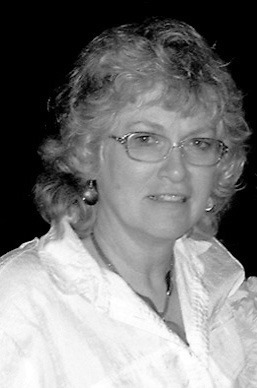
When I was employed at Seminole State College for 19 years, I taught English and Literature, and I also worked with unemployed clients in preparing for the work force for 14 of those years. In the other 5 years I worked in Assist Lab as a tutor and as a counselor for (at different times) Focus, Upward Bound, Veteran’s Upward Bound, and Gear Up. It was during the time I served as a tutor not only for college students, but I tutored for elementary, high schoolers, and individuals who were illiterate. The latter proved the most challenging.
Having a heart for illiterate people, I took training to help people learn to read at Seminole Public Library, under the Laubach Literacy Action program. It was designed to help them by using graphic charts linking pictures with words and symbols. This method of learning made available literature showing people of all ages how to learn to read at no cost.
My first student was a middle-aged man who was a cross-country truck driver. He wasn’t interested in reading as he was wanting to learn his numbers and how to count. He had been driving a semi for years, and when he’d have to stop to get gas or food, he would just give them a hand full of dollars and trust they would give him back the right change. This was in the early 90s, and he used cash only—no credit cards. Because he didn’t know how to read, I never learned how he could figure out where he was going, not being able to read traffic signs.
We worked a few weeks learning to count to 100, but I never got to teach him money denominations and, simple addition or subtraction so he could count back change. I never got to even teach him the alphabet, either. He just quit coming. A few weeks later I learned his wife was a college student there. I met her in the Assist Lab and asked about her husband. She simply said he quit, losing interest after they had cable installed. He must have quit truck driving and decided to stay home to watch TV. I don’t know; I only hoped he learned enough to be more successful in driving a truck if one day they couldn’t pay their cable bill.
I had to drop teaching this literacy method after I began working on my master’s degree to get on full-time teaching. This was while I was teaching part-time, working in one of those government-funded programs (listed above) and in Assist Lab. My plate was full.
While deciding to share these memories, I researched Frank Charles Laubach (1884-1970) who was a missionary in foreign countries. Attempting to work with illiterate Muslims of southern Mindanao in the Philippines he became frustrated. This was in the 1920s when he developed a system to teach them to read in their own language using charts with pictures accompanied with words and syllables. The Muslims became so enthusiastic with this method of learning to read that it spread rapidly. However, at the onset of the Depression the interest dried up, until a local chief ordered each learner to teach the method to others. This principle is called ‘Each One Teach One’ which became highly successful.
In 1945 Laubach formed Laubach Literacy Inc. to work worldwide, and in 1968 he launched Laubach Literacy Action to work in the US. His work touches 103 countries, involving 313 languages. His 56 books promote both literacy and the intense spirituality which marked his life.
See how determination to help people turned into a world-wide endeavor? Never give up on ideas to help others have a better life. You never know how far your efforts may go if the one or ones you help are encouraged to use the principle ‘Each One Teach One.’ This is still used to encourage others when learning literacy though Laubach’s program…. Sounds similar to the Golden Rule, doesn’t it?