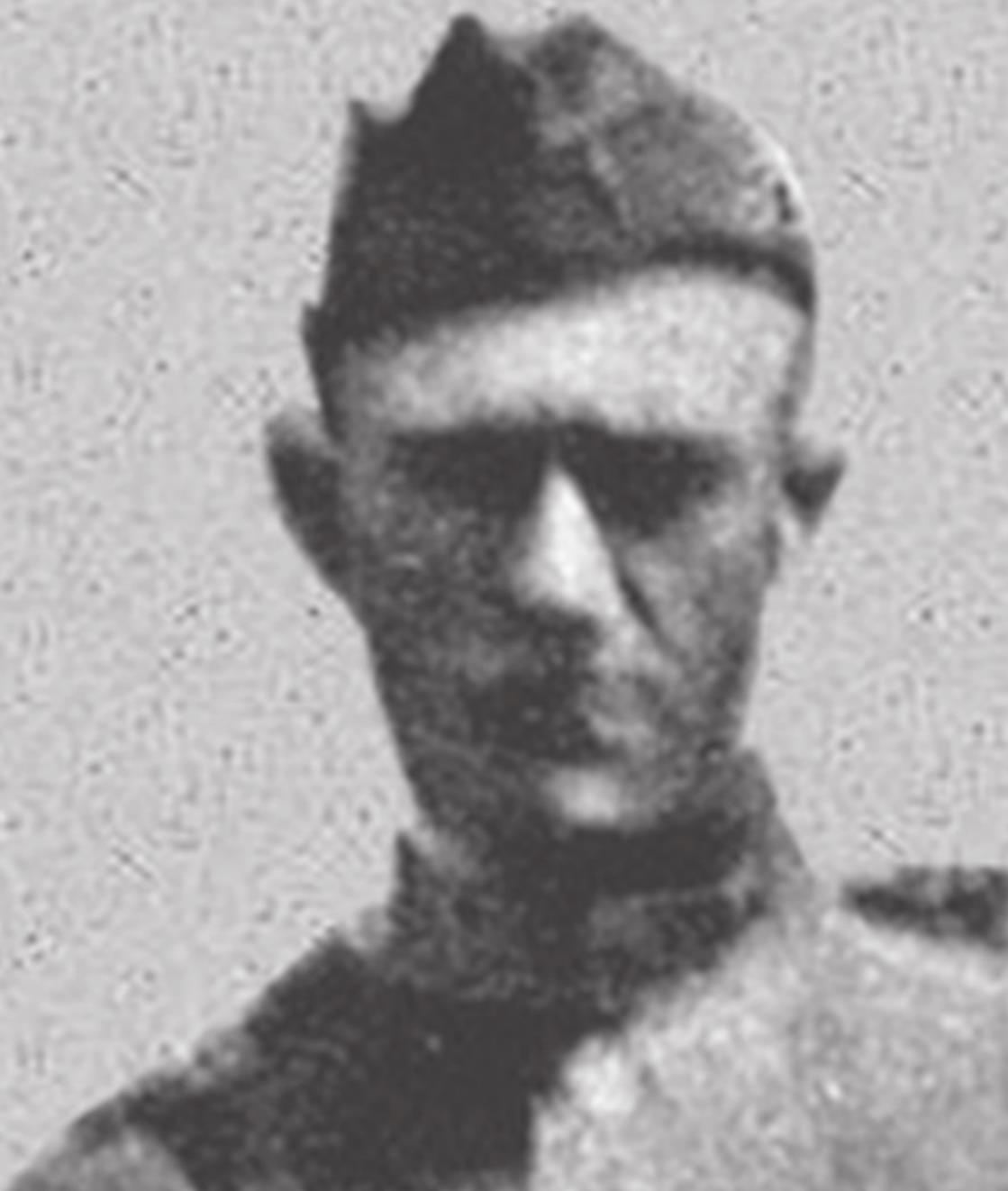
WWI Hero Brings Honor Home to Seminole County
On a beautiful spring day over a hundred years ago, a hero was born.
Harold Leo Turner was born May 5, 1898, in Aurora, Mo., but called Seminole County, Okla., his home all his life.
He was 16 when World War I began; by the time he was 20, Turner had already moved to Seminole and joined the U.S. Army.
He was placed with Company F, 142nd Infantry, 36th Division.
Months of training, then more months of fatigue, deprivation and homesickness plagued Turner and the other soldiers.
It was nearing the end of the “Great War,” Oct. 8, 1918, in Eteinne, France, when Turner’s platoon had its most defining moment.
That moment meant death for almost the entire platoon.
The area went from wooded hills surrounding the town to the cleared area around St. Etienne.
An Oklahoma officer with the 36th later wrote that “The northern slopes of Blanc Mont are covered with growths of pine and underbrush which thin out as the village of St. Etienne and the Ames are approached.
“Beyond the edge of these trees and underbrush the country is open and for anyone to venture out of the cover was to draw fire immediately in the day time.”
The Germans hid machine gun nests in wooded areas. The posts were arranged in depth, and arranged so that if one was captured it could be fired on by another position. The system worked, causing casualties in the ensuing American attack.
Nearing Etienne, the 142nd battalion scouts, runners and a detachment of Signal Corpsmen battled for their lives against Germany machine guns only 25 yards away.
They were forced to take shelter, but shelter in World War I meant digging a trench.
As one soldier put it, “I have two weapons of defense, one a rifle the other a small shovel which I carry on my belt.
“It may sound foolish but both are of equal importance and I would not part with my latter friend which I use solely for digging.”
Another member of the Infantry wrote a young woman, asking her to: “Tell your dad and Mr. White that if they want any pools dug, just to wait until Argie and I get back and all they will have to do is get something that sounds like a machine gun or a cannon and turn it loose and either one of us can move more dirt laying flat on the ground with a shovel than they could both move with a team and scraper.”
The trenches, however, hardly protected the soldiers: all but four died.
One of the four was Turner, only a corporal, but still second in charge.
He had fearlessly led the platoon through the heavy fire, continually encouraging them.
They paused when they came within 25 yards of the machine gun emplacement, trying to decide what to do.
And when the fire shifted for a moment, Turner rushed forward with a fixed bayonet and charged the machine gunner alone.
He captured the strong point of the machine gun brigade, rounding up 50 German prisoners.
“His remarkable display of courage and fearlessness was instrumental in destroying the strong point, the fire from which had blocked the advance of his company,” read the Medal of Honor citation that Turner received later for his action.
The war ended only a month later and Turner lived out the remainder of his years in Seminole County.
He is buried at Little Cemetery, a hero commemorated with only a small flat concrete slab in the ground of the Oklahoma soil that he risked his life to protect.