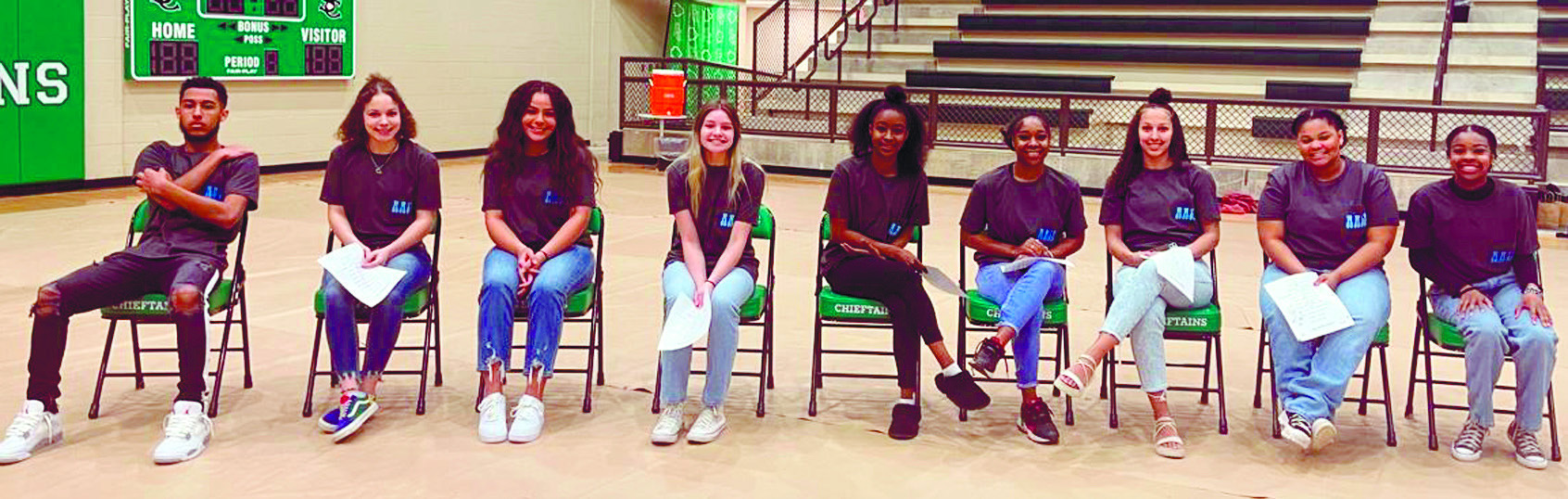
Seminole AASA Presents Black History/Heritage Program
Seminole High School’s African American Student Association (AASA) hosted their annual Black History/ Heritage program at Seminole High School on Wednesday, February 22. This student organization is sponsored by teachers Ebony Harris (Head Sponsor) and Krista Williams- Clark (Co-sponsor). The event received high praise from the public, staff and students that were present. “One of the best assemblies held at Seminole High School,” several teachers agreed.
In addition to the impressive contributions by the AASA student members themselves, this event also included special guest speakers Anastasia Pittman, former State Senator and State Representative, and Chief Reggie Knighton of the Dosar-Barkus Band, a Freedmen tribal band of the Seminole Nation.
The assembly opened with a moving performance of the Black National Anthem, “Lift Every Voice and Sing,” by AASA member Audrey Moore. The program was an entertaining and informative immersion in Black culture that included: past and current connections between Native and African Americans; general poetry; “Slam” poetry (a relative new art form that is an energetic and competitive poetry reading that includes audience participation); an overview of the many historical contributions Black inventors/inventions have made; and beautiful, soulful music performed by Anice Young, a popular solo artist who also performs in choir groups.
The event closed with the National Anthem performed by AASA members Tristan Davis and Jaxie Satawake.
“The students truly stepped up to the occasion and made this assembly one to be remembered for years to come,” AASA Sponsor Ebony Harris proudly commented.
The history.com website explains that Black History Month is an annual celebration of achievements by African American and a time for recognizing their central role in U.S. history. This event was the brainchild of noted historian Carter G. Woodson and other prominent African Americans that created the Association for the Study of Negro Life and History (ASNLH) in 1915. Today this group is known as the Association for the Study of African American Life (ASALH).
The group first sponsored a national Negro History week in 1926, choosing the second week of February to coincide with the birthdays of Abraham Lincoln and Fredrick Douglass.
This annual event expanded into a monthlong observation on many college campuses during the civil rights movement in the late 1960’s. President Gerald Ford officially recognized Black History Month in 1976. Since then, every U.S. president has officially designated the month of February as Black History Month. Other countries around the world, including Canada and the United Kingdom, also devote a month to celebrating Black history.