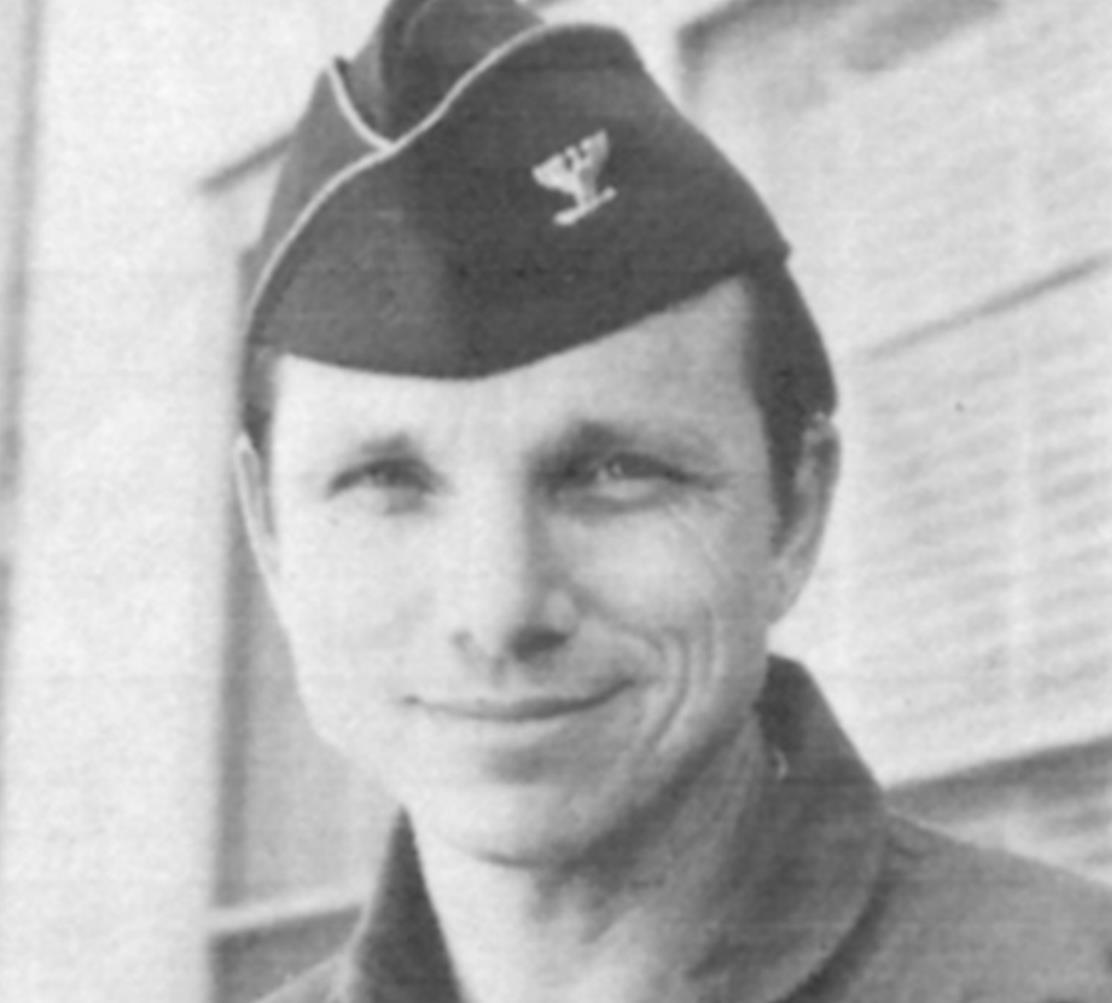
Pilot Training is Intensive
Born in 1933, Billie Houston Parker was meant to fly airplanes.
He enlisted in the U.S. Air Force (USAF) in 1954 at Will Rogers Field, OKC to begin his long and extensive career in being a pilot, as well as training others to do so.
He was assigned to the 3700th Basic Military Wing, Air Training Command, Lackland AFB, Texas upon enlisting.
After completing the 524-hour preflight training course, Parker went to Bartow Air Base in Florida and Bryan AFB, Texas, before receiving his 2nd Lt. Commission in the Air Force Reserve in 1955.
He also attended Seminole Junior College prior to his commission.
During Parker’s last formation flight as a student pilot, he was able to call out bogies and save lives when two 3-ship T-33 formations collided in mid-air. One life was lost, however, many others were saved.
Parker’s first assignment was at Tinker AFB flying C-119C aircraft.
In 1960, he was assigned to Tachikawa AB, Japan for three years as a EC-47 flight inspector. Here, he ranked up as Captain.
Parker was a C-47 pilot at Tan Son Nhut Air Base, Saigon, Vietnam in 1962-63.
He returned to the states in 1963, assigned to Civil Air Patrol (CAP) Headquarters, Ellington AFB, Texas and later in 1966 spent time in England AFB, Louisiana, to train aircrews in the C-47.
Parker was part of the gunship development with Curt Messic, Lowell Kirkpatrick and Ron Terry. They worked on becoming proficient in side-firing shooting.
He, along with other volunteers and Ron Terry were sent to Forbes AFB, Topeka, KS to set up a school. Here, through intense training and a couple of “peace missions,” the men became more accurate with their shooting skills.
Parker traveled extensively with his training and flying missions. He spent time in the Philippines, Vietnam, and numerous areas in the states.
He carried everything from ammo, veggies and bodies during his time as a pilot.
Parker trained thousands of young soldiers in the art of flying and all it would entail in any numerous types of aircraft.
He attained the ranking of Colonel in December 1977. However, Parker was a long way from being done.
He completed 31 years and retired in June 1985 with many service awards.
Among the awards were: the Legion of Merit medal (which ranks higher than the Distinguished Flying Cross), the USAF Outstanding Civilian Career Service Award, the Meritorious Service Medal, the National Defense Service Medal and several others.
His wife, Jo Anna Parker, was awarded the Certificate of Appreciation for her support with contributed significantly to her husband’s career in the Air Force and the Nation.