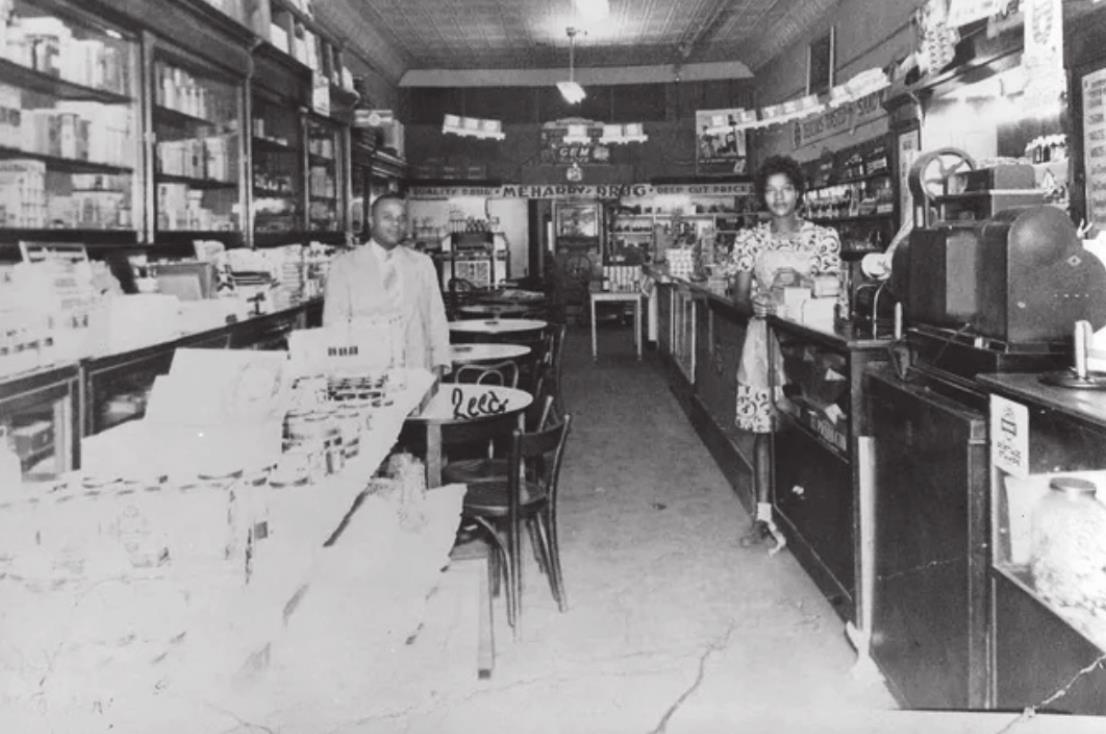
The Legacy of Black Wall Street
When people think of the Greenwood District in Tulsa, Oklahoma, they either think of the poverty that reigns today or the tragic and terrible events of the Tulsa Race Massacre. What many do not think about is the prosperous gem of North Tulsa that was Black Wall Street. Prior to the white supremacist terrorism that took place during that fateful week in 1921, the Greenwood District was one of the most prosperous all-black communities in all of America, and being home to over 300 blackowned businesses; it was a true economic powerhouse. From law firms, to hotels, to movie theaters, this community circulated wealth that led to higher property values, clean streets, and well-funded schools. Founded in just 1906, Greenwood, by today’s standards, was a wealthy suburb that defied the odds of Jim Crow America.
A wealthy black landowner from Arkansas named O.W. Gurley in 1906 founded the Greenwood District. Gurley, after participating in the Land Run of 1889, purchased 40 acres of land, which was to “only be sold to colored[s]”. The remarkable thing about this is that many black Americans were still enslaved, although in the form of sharecropping rather than actual slavery, and were all but bound to the land of their former masters. These 40 acres gave former slaves and young black women and men a way out and into a real Promised Land. Gurley’s purchase was the first step towards a 15 year period of true economic prosperity for black Oklahomans. Following the purchase, Gurley set up a boarding house for young black Americans to stay until they got on their feet. Once more people began to move to the Tulsa area, the community began to gain momentum, reaching over 250 businesses in just 10 years, with Gurley as a main lender to all of the start-ups.
The main significance behind Black Wall Street came from the circulation of money. In Greenwood, every dollar would change hands 19 times before even leaving the district. What this means is that every dollar spent in Greenwood would go to another Greenwood business, then another, and then another until it had moved around about 19 times. This generates economic activity that makes everybody in the community wealthier and better off. Another important thing to note about these businesses is that they weren’t Walmarts or 7/11s, or any other chain business. They were standalone businesses owned by people that lived in the community. The significance of this is that every dollar spent at that business, other than taxes, went back into the community in one form or another. This kind of money circulation proved a powerful force that fueled the economy of the Greenwood District, its schools, its roads, and its people.
Black Wall Street, like Rosewood in Florida, and many other black-owned businesses and communities, have fallen victim to racism and white supremacist forces that have obliterated economies and homes alike. Although this is very disheartening, not all hope is lost. In North Tulsa, programs like Tulsa Dream Center, 36 Degrees North, and other nonprofit groups are working on ways to keep wealth circulating in the majority-black community. This circulation of wealth is truly the key to the locked room that is a prosperous, successful, and thriving community. In the last few years, Greenwood’s economy has grown and more people have moved there. Businesses and nonprofits like Magic City Books and the Greenwood Historical Society are educating Greenwood residents on their history and helping achieve reconstruction. City initiatives like community policing programs and the construction of new parks and community centers are bringing Greenwood residents together and giving them the opportunity to grow and learn about their roots. Finally, teachers and students at Booker T. Washington High School are working together to ensure that every student in the poverty-stricken neighborhood is given the tools to succeed and buy their ticket into the middle class. Greenwood is on its way back to the state it was in 100 years ago this June. It is growing, beginning to show signs of prosperity, and is finally making its way back into the fold of Tulsa economic and political power. From here, Greenwood can only move forward, and it seems to be doing just that.