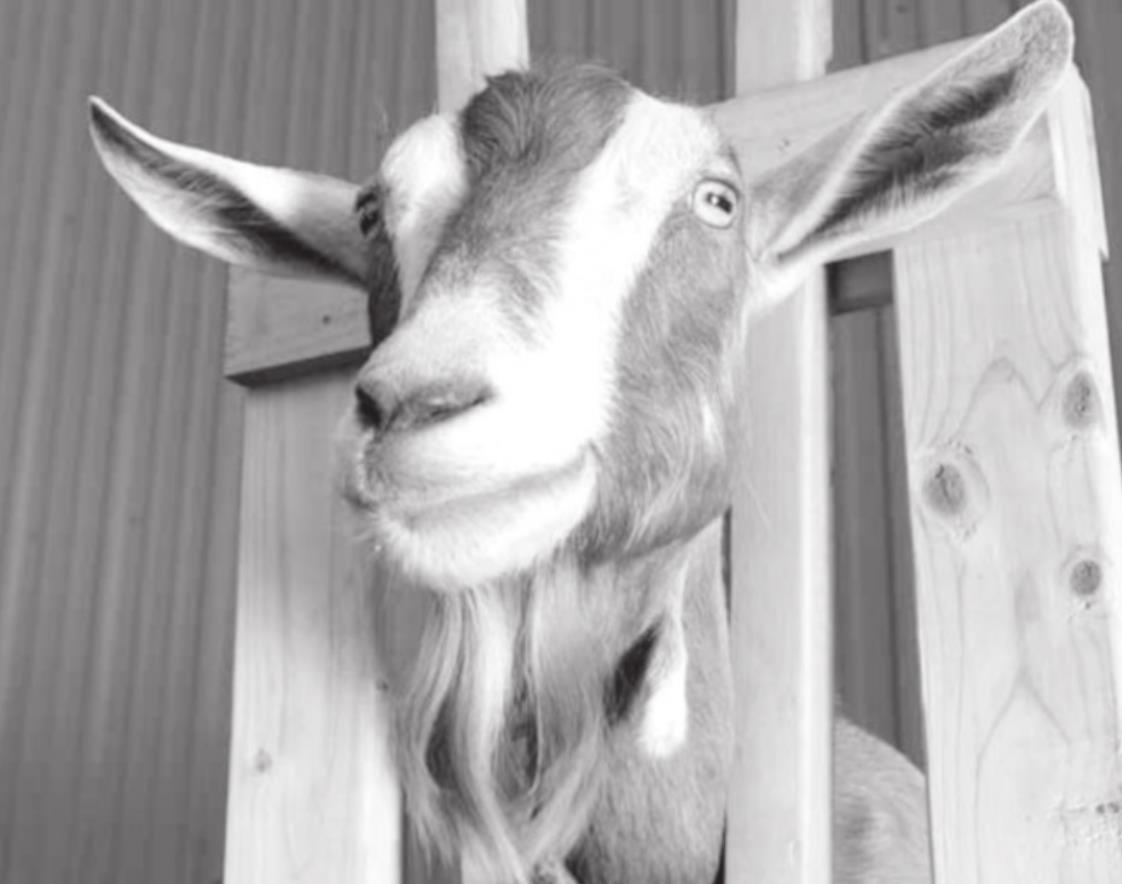
Learn Self-Sufficiency with a Dairy Goat
From Nubian to LaManacha: learn what to consider when selecting a dairy goat breed and how to get top-quality goat milk.
Sooner or later, almost every homesteader considers buying a dairy cow or goat. There’s something about the idea of rich, fresh milk, straight from a gentle animal, that appeals to the homesteading spirit. Sometimes the appeal is economic — the milk you get from an animal you raise may be less expensive than what you buy in a store. Sometimes the driving notion is one of self-sufficiency, and sometimes it’s the appeal of clean, honest food produced in exactly the way you wish. Usually it’s a mix of all these reasons.
Unless you have a large family, a dairy goat is almost certainly more sensible for the family milk animal than a cow. Although cows have their merits, they produce more milk than a small family can practically use. The average Jersey cow gives about 6 gallons of milk per day over a 305-day “lactation cycle,” the 10 months from the time she calves to the time she needs to be rested before her next calf is born. The average Holstein cow gives much more — nearly 9 gallons per day, according to Holstein USA. By comparison, a sound Nubian dairy goat — sometimes called the Jersey of the goat world because its milk compares in richness to the high butterfat of Jerseys — may give 1 to 1 1/2 gallons of milk a day. A good LaMancha dairy doe, comparable to a Holstein, may average nearly 2 gallons a day.
Unless you plan to start a small-scale dairy and process all the government paperwork that a dairy or cheesemaking plant requires to operate legally, in most cases a family dairy goat will give you years of good, rich milk — in just the right amount for your family.
Dairy goat basics
First, let’s get some terms straight. A dairy goat female is a doe, not a nanny. She’ll be a doeling until she kids (or has babies) for the first time. A dairy goat male is a buck, not a billy. Until he reaches breeding age, he’ll be a buckling. If he’s castrated, he becomes a wether. There are two reasons to refer to dairy goats properly: Using the proper names will lend you some credibility as you talk to breeders, and if someone you’re talking to about an animal uses the wrong terms, you can be pretty sure the animal in question is not well-bred.
Now let’s consider the main dairy goat breeds. While you’ll hear stories about the brush goat who turned out to be a marvelous milker, I counsel you to buy your doe — especially your first doe — from a breeder who specializes in the breed you’re interested in. It costs the same to feed a worthless animal as it does a good one, so why not start with a good one?
Working with a breeder invariably gives you a mentor who is only too glad to answer questions and provide advice, while that guy with the bargain goat on Craigslist is likely not to return your phone calls once your check clears. Moreover, a reputable breeder will only sell a healthy animal from good bloodlines, while that Craigslist person may be trying to dump a sick animal. Start with the breed organizations first to locate a reputable breeder in your area.
It’s beyond the scope of this article to discuss each breed in depth, but the breed associations, the American Dairy Goat Association, and other sources can tell you more about the breeds you’re interested in. Still, you’re reading this because you’re interested in milk, so here’s a little about the milk qualities of each breed.
Milk goat breeds
The standard-sized breeds are the most familiar and what most people think of when they imagine a goat, whether it’s a Nubian with its Roman nose and pendulous ears or a LaMancha with its tiny (completely normal) ears. (Bonus goat joke: A Nubian and a LaMancha met on the street. Both said at the same time, “Something about your ears just bugs me.”)