Have Leagues Upheld Promises Since Floyd’s Murder?
George Floyd’s murder -- and the graphic footage that captured his final breaths -- rocked athletes, coaches and executives throughout professional and amateur sports.
With the country already on edge just a couple months into the COVID-19 pandemic, a viral video showed then-Minneapolis police officer Derek Chauvin kneeling on Floyd’s neck for about nine minutes before Floyd died on May 25, 2020.
The death of an unarmed Black man by police was not a new occurrence in America, with the shooting of 20-year-old Daunte Wright this month being the latest reminder.
But Floyd’s killing seemed to have a galvanizing effect on the sports world.
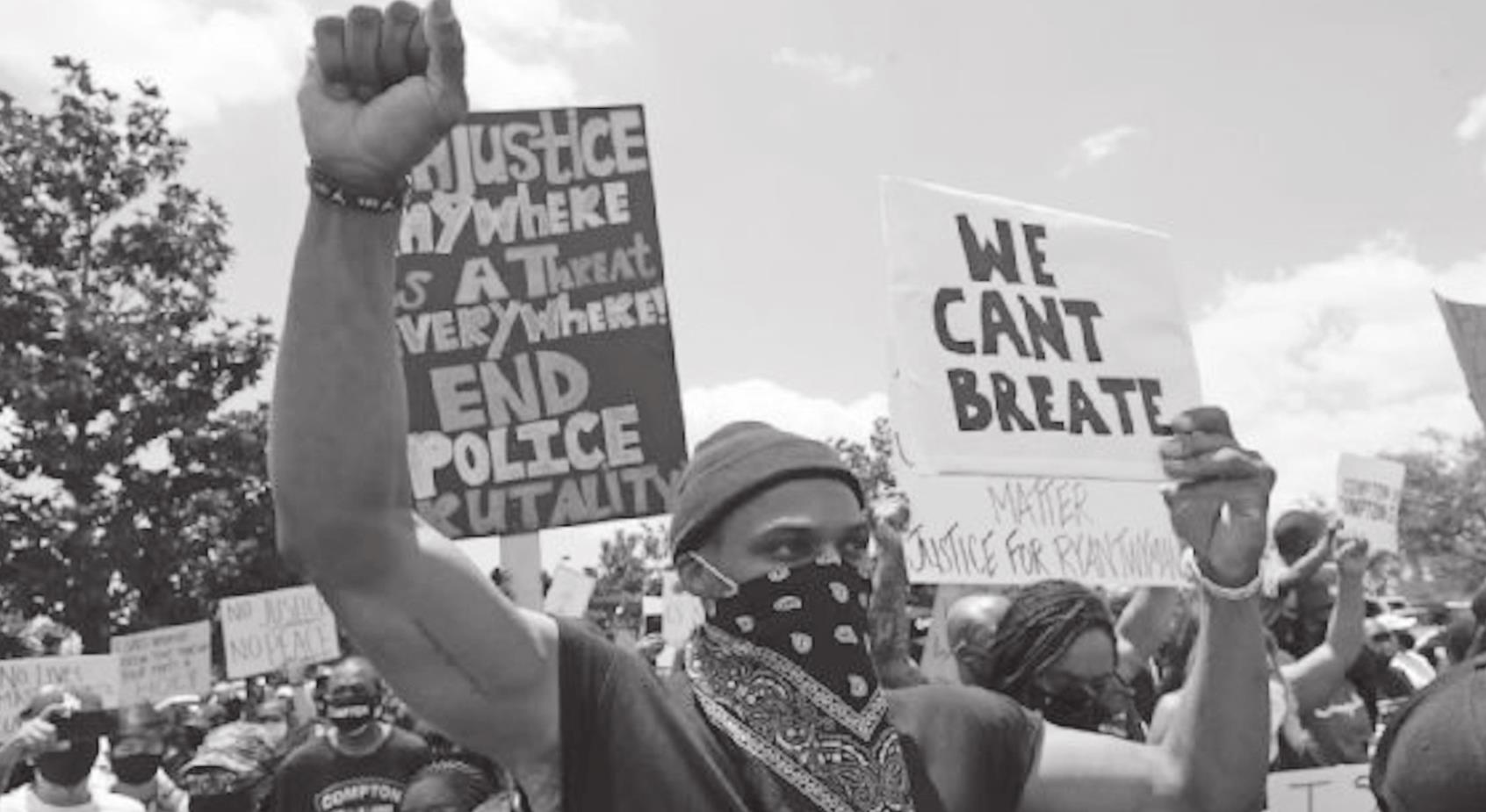
High-profile athletes from multiple leagues and sports participated in protests against police brutality throughout the United States.
Legends, including the famously reticent Michael Jordan, spoke out: “I stand with those who are calling out the ingrained racism and violence toward people of color in our country,” he said in a statement on May 30.
“We have had enough.” Some of the NFL’s biggest stars, including Patrick Mahomes, Ezekiel Elliott, DeAndre Hopkins and Saquon Barkley, released an “I am George Floyd” video, calling for justice for the victims and support for their right to peacefully protest.
Renee Montgomery, then a guard for the Atlanta Dream and now a partowner of the team, skipped the WNBA season to focus on social justice.
The U.S. women’s national soccer team released a unified statement supporting Black Lives Matter, while individual stars, like Rose Lavelle, took to social media: “I will never experience the fear and pain of being a black person in America, but I’ve seen the injustice and reason for this fear and stand with the black community in this fight.”
In the months that followed, many leagues and organizations pledged action, money and platforms to help push for the eradication of racism, on and off the competition stage.
Players from the Minnesota Timberwolves gathered at a Minneapolis rally that former NBA star Stephen Jackson helped organize on May 29.
As more Black Lives Matter marches began to sprout around the country, players including Stephen Curry, Jaylen Brown, Malcolm Brogdon, George Hill and Damian Lillard were also in the streets protesting.
Commissioner Adam Silver sent an internal memo to league staff within days, saying the NBA shared “the outrage” and offered “sincere condolences to families and friends” of George Floyd, Ahmaud Arbery and Breonna Taylor.
“We are being reminded that there are wounds in our country that have never healed,” he wrote. “Racism, police brutality and racial injustice remain part of everyday life in America and cannot be ignored.”
Within the next week, the National Basketball Coaches Association established a committee on racial injustice and reform to seek solutions in NBA cities. Its statement, signed by 33 current and former head coaches and nearly 180 assistant coaches, read, in part: “As NBA coaches -- both head and assistant coaches -- we lead groups of men, most of whom are African American, and we see, hear and share their feelings of disgust, frustration, helplessness and anger. The events of the past few weeks -- police brutality, racial profiling and the weaponization of racism -- are shameful, inhumane and intolerable.”
The Milwaukee Bucks organized a strike and did not play Game 5 of their first-round playoff series against the Orlando Magic. By the evening of Aug. 26, the NBA had postponed all three of its playoff games, while the WNBA and other pro leagues followed suit.
“I got half of my brain locked in on the playoffs and the other half locked in on how the hell I can help Black people become greater in America,” LeBron James said then. “I know people get tired of hearing me say it, but we are scared as Black people in America.”
The stoppage sparked two days of meetings between players, coaches and executives, who discussed how, and if, they wanted to proceed with the 2020 season.
Ultimately, players decided to resume the playoffs, while the league jointly announced initiatives including increased voting access, promoting civic engagement and advocating for “meaningful police and criminal justice reform.”
“We didn’t think that this was gonna turn the way that it did,” Bucks guard Wesley Matthews said at the time.
“But we are grateful for the fact that, that moment, that pause, that postponement was able to help everybody reflect again and realize that everybody’s gotta step up.”
In the eight months since, the NBA has upheld its financial promise, and the majority of teams and arenas played a role in the election.
On April 5, the league also announced the distribution of $3 million from the NBA’s original commitment in grants to nine different organizations as a part of its larger pledge.
“It’s not to say that every coach should be Black, but when situations like these come up, how many times has a Black coach had a chance to coach two champions on it in terms of Brooklyn? I haven’t seen it,” Chicago Bulls guard Garrett Temple, who is a vice president of the players’ association, told ESPN. “With that being said, things are not equal in my opinion still, and it would be unrealistic to expect it a year removed.
“It’s different stories every single day about families’ lives getting altered because of police brutality,” Brooklyn Nets star Kevin Durant said recently. “At this point, I don’t really know what to say.”
“Organizations had to speak up, their employees demanded that they spoke up, and that was a turning point for us and for other organizations to realize, ‘You know what? We’ve got to pay attention and keep our eyes on the pulse here because this is serious business that impacts our employees and community, and we have to be attentive to it.’”
Almost a year after Floyd’s murder, and with Chauvin being found guilty of second-degree murder, third-degree murder and second-degree manslaughter by a jury Tuesday, we look at the leagues’ progress, their actions and inactions, and the work that still needs to be done.