April 19, 2015: The Day Time Stood Still in Oklahoma
Monday Marked 26 th Anniversary of Bombing That Killed 168, Injured Over 600
(Editor’s note: The following story was originally published in our April 19, 2015 edition).
April 19, 1995. A date that is most likely permanently etched into your memory banks. For most Oklahomans, the mere mention of the date is sufficient information. No further details need to be provided for folks to know that the Oklahoma City Bombing is the subject of the conversation at hand.
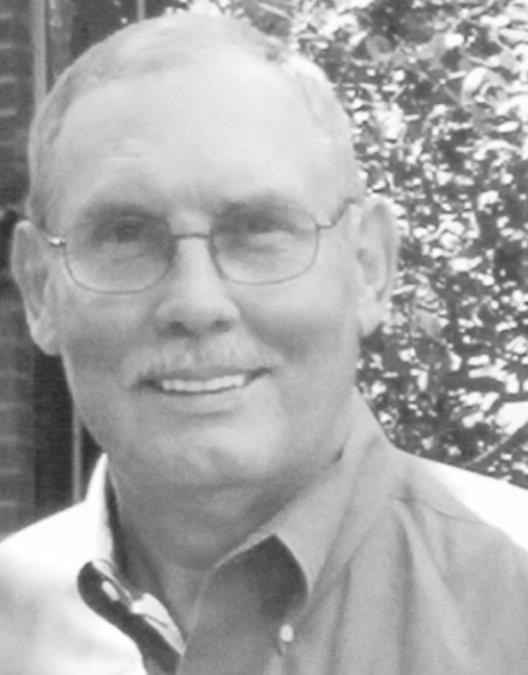
Richard Williams, who grew up in Seminole, can tell you all about it. He didn’t just hear about that fateful day in the news. He was there…inside the A.P. Murrah Federal Building when the bomb went off. And he lived to tell about it.
Williams, now retired, was the District Manager for the General Services Administration Public Buildings Service for the state of Oklahoma. His responsibilities included operating the A.P. Murrah Federal Building when it opened in 1977.
Williams was in his office on the first floor of the building when the blast occurred that killed 168 people and injured over 600. He was about 75 feet away from where the truck bomb that unleashed the deadly carnage was parked.
“For me, it was a typical workday. I usually got to work at 6:00 or 6:15 every morning to catch up on the previous day’s phone calls, check on the building systems, and get ready for the phone to start ringing be-tween 7:00 and 7:30,” he said.
Later that morning Williams attended a meeting in his manager’s office. After the meeting, he returned to his office.
“I was standing in my office, talking about the results of the meeting with my planner/estimator, Tom Hall, and that’s the last thing I remember. I didn’t hear anything, feel anything or know anything until days later,” Williams stated.
Williams later learned that he was buried underneath the rubble and eventually pulled out by a Police Officer, Terry Yeakey, who Williams now calls “my he-ro.”
Yeakey entered the build-ing and noticed an arm sticking up through the rubble. That arm belonged to Williams.
Yeakey felt the arm, and after not being able to find a pulse, moved on to assist Tom Hall, who was injured but still conscious.
After helping Hall, Yeakey walked back by the area where he saw the arm. Williams isn’t sure whether he made a sound or moved his arm, but this time Yeakey realized that the person attached to the arm below the rubble was still alive.
The officer pulled him from the rubble. Shortly after 9:30 a.m., Williams was in the hospital.
“I am here today to tell my story and continue on with the work that I’ve done, all because of Officer Terry Yeakey,” Williams said. “That’s exactly who heroes are…people like him,” he added.
Williams’ injuries were severe. The blast cracked his skull, severed his ear, crushed his right hand, and littered his body with debris and shrapnel.
“I was out of it for the first several days. They didn’t tell me what had happened until Friday,” he recalled. “The bombing was on Wednesday, and it was Friday before they let me watch the television and see what the rest of the world had been seeing,” he stated.
Williams said he was devastated when he saw the news coverage. “It was very devastating to me, because of my connection to the building, the people I worked with all those years, and the fact the building was pretty much my responsibility,” he said.
Remarkably, he returned to work 43 days after the bombing. After returning to work, Williams became very involved in the memorial process. He has served on the Board of Directors of the Oklahoma City National Memorial Foundation and numerous committees for the building of the memorial.
Nearest his heart is his work on the committee that drafted the Mission Statement from which all aspects of the Memorial are patterned.
He will be reading the mission statement, with the help of his grandchildren, at the memorial ceremony this weekend.
Williams was selected by President Clinton and then again by President Bush to serve on the nine-member Trust, which had oversight of the construction of the outdoor symbolic memorial, and the operations of the Memorial, the Memorial Museum, and the Institute for the Prevention of Terrorism.
Since 9/11, 2001, he has been involved with the World Trade Center Survivors Network, working with them in their healing process. He served on their steering committee.
Recently, Richard was awarded the Medal of Honor, the highest honor presented by the Daughters of the American Revolution. The DAR in Texas recognized him for his leadership, trustworthiness, service and patriotism in sharing his lesson of a positive outlook even in the aftermath of tragedy.
Richard served in Vietnam in 1967 and ’68. He and his wife, Lynne are the proud parents of two sons who are both teachers. His life has always been a busy one with involvement with youth sports, coaching basketball or baseball for 14 years. In 2005, he and Lynne moved to Texas to be near their grandchildren.
He continues to speak to school groups, civic organizations and church groups about his experience and the hope that has kept him strong.