Oklahoma Program Aims to Fill Long-Term Care Shortages by Certifying High Schoolers
By the time she graduated high school, Maggie Easter was a certified nursing assistant and had hands-on clinical experience without spending a dime on tuition.
Easter enrolled in a longterm care nursing program at an Oklahoma CareerTech center while attending an Oklahoma City-area high school with the hope of eventually earning a bachelor’s degree in nursing. As the daughter of a single mother, the 19-year-old said she was always worried about the cost of education.
“I was really scared to take out student loans after I graduated, and with this it has all been so fine,” she said. “They’re so financially supportive here. I’ve never taken out a loan or had any financial strain and I instantly got a job. I started working at Bethany Children’s Hospital as a senior in high school and now I’m becoming a (licensed practical nurse) for free. … To me, that stability was worth more than anything.”
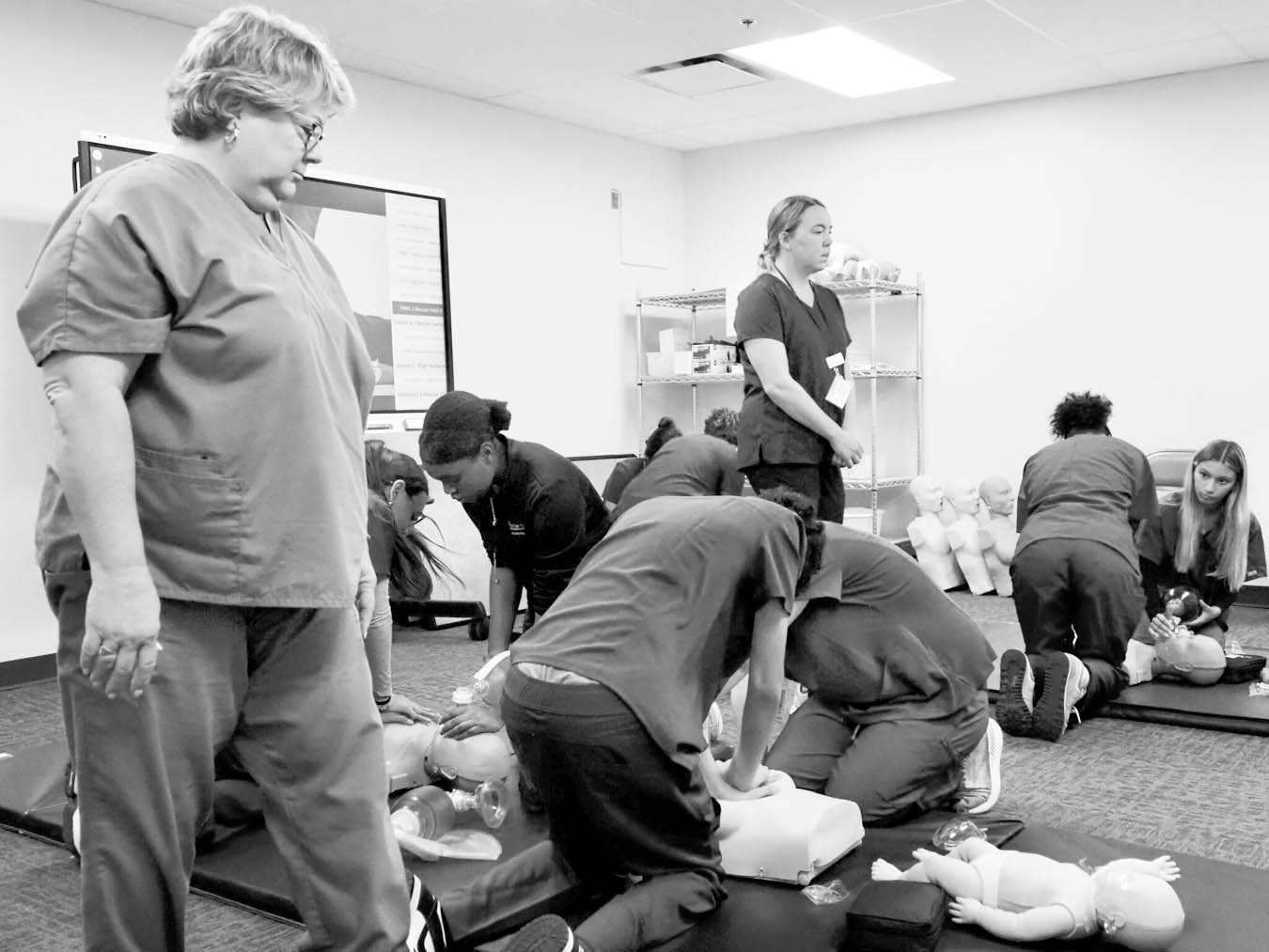
As Oklahoma employers struggle with shortages of certified nursing assistants – mirroring a national trend – Easter is one of hundreds of high school students that have completed an Oklahoma Department of Career and Technology Education program aimed at filling that gap. Through the program, students earn nursing certifications that can lead to employment opportunities or serve as a bridge to other health care professions after they graduate.
Certified nursing assistants often perform tasks at a patient’s bedside such as helping with bathing, walking from room to room and taking vitals. But experts say the ongoing national shortage, due in part to recruiting struggles, is jeopardizing the quality of care patients receive.
To help bridge the gap, all 29 of CareerTech’s technology center districts, and most of their 67 campuses, offer certified nurse assistant training in the form of both full-time high school and adult programs as well as short-term, workforce and economic development programs, said Lara Morris, the agency’s program manager for health and science education. The program costs about $114.8 million a year to operate and is funded by federal and state dollars.
High school students, who pay no tuition, spend half days at their local technology centers for the programs. After completion, some students, like Easter, are able to take advantage of “bridge” programs to earn the next level of nursing certification through CareerTech programming.
Addressing a nationwide nursing shortage Emily Coppock, the vice president of clinical excellence at the Oklahoma Hospital Association, said high turnover and fear of violence against health care workers can be a deterrent to working in the field.
Early education is crucial to recruitment and retention, she said.
A 2024 workforce survey report from the Oklahoma Hospital Association revealed that 13.1% of unlicensed nursing staff positions are vacant, and there is a 52% turnover rate. The turnover rate is so high because many of these people pursue a higher level of nursing or a different health care field, Coppock said.
“Physically, we just don’t have the people to fill those gaps that are going to be left by baby boomers retiring,” she said.
Steven Buck, president and CEO of Care Providers Oklahoma, said certified nursing assistants are the “backbone” of care in long-term care facilities, but retaining them can be a struggle. The organization represents and advocates for residents and employees of those facilities.
“They are the individuals who are most engaged with residents, making sure that their quality of life is addressed, providing care, providing service,” he said. “And they do this diligently, and do it across the state, and do it in a very heroic manner.”
Part of the difficulty in retaining certified nursing assistants is pay because the long-term care industry has to compete with retailers and fast food chains, Buck said. Increasing this pay is something Buck said his group is advocating for at the Capitol.
Nursing assistants, on average, make just over $16 per hour in the state of Oklahoma, according to the U.S. Bureau of Labor Statistics. Oklahoma’s home health and personal care aides make around $13 per hour, licensed practical nurses make $26 per hour and registered nurses make about $41 an hour.
In general, most of these nursing assistants are employed in long-term care or home health providers and they are vital to the industry, Buck said.
Some of Oklahoma’s major hospital systems, including Mercy, Integris and University of Oklahoma Health, said programs like CareerTech’s that catch students in high school and provide hands-on, clinical experience are helpful to fill employment gaps.
Buck said the state is “on the cusp of something commonly referred to as the silver tsunami.”
“There are going to be just, from generational cycles, a tremendous number of people emerging into that era of life where they will need enhanced care,” he said. “And at the same time, there are going to be fewer caregivers available. So I applaud CareerTech for investing the time and energy to recruit these CNAs. We desperately need them, and we need them to stay committed to the field.”
Skills learned now will lead to jobs down the road Jackson Hukill, 18, attends a Francis Tuttle technology center and is working toward his certified nursing assistant certification. He hopes to eventually become an anesthesiologist.
In his classes, Hukill said he’s learning skills such as CPR, medical terminology, proper hygiene and use of personal protective equipment.
“I personally love being hands on, and I know a lot of people love being hands on,” he said. “It helps a lot of people learn and it definitely does give us kind of a step up from what I think most health classes or whatever you would have in high school, or even some undergrad, college stuff isn’t as hands-on.”
A total of 1,446 students graduated from the program in the 2023-24 school year, according to an agency spokesperson. Data from the most recent school year was not available.
Nearly 350 of these students reported they were employed in a job related to the program one year after completion, according to data provided by CareerTech. Another 1,030 had opted to continue their education, whether at CareerTech or elsewhere.
Brent Haken, director of Oklahoma CareerTech, said the agency determines what programs are offered based on need throughout the state, not “wants.” Because of this, health care and manufacturing jobs have become the agency’s priority for workforce training programs.
“These are sophisticated programs, and the curriculums are based on feedback from the actual industry that has input,” he said. “The curriculum that we provide to students is customized to meet the needs of the industry.”
High school students do not pay tuition for the CareerTech programs offered in their district, so local property taxes offset the costs, an agency spokesperson said. Most technology centers generally receive 30% of its funding from state and federal dollars, with the rest being voter-approved property taxes.
Patience Melchor, 18, a student at Indianola High School taking classes at the Kiamichi Technology Center in McAlester, said she’s already using the nursing assistant certification she earned at a long-term care facility in her area.
Melchor wants to become a registered nurse and specialize in labor and delivery, but she said she isn’t sure if she’ll go straight to college or enroll in another CareerTech program first.
“Every Wednesday we have a skills day, so we wear our scrubs and come into the lab and put our skills to test on the mannequins, or even sometimes each other,” she said. “We learned how to do bed baths on the mannequins, and we practice blood pressure and vital signs on each other and stuff like that. Then we go to clinicals towards the end of the year and those are really fun because you actually get to go to a clinic or a nursing home, and it was really fun to actually get to work on a real person.”
This story was produced as part of/supported by the Higher Education Media Fellowship at the Institute for Citizens & Scholars. The Fellowship supports new reporting into issues related to postsecondary career and technical education.