Making History:
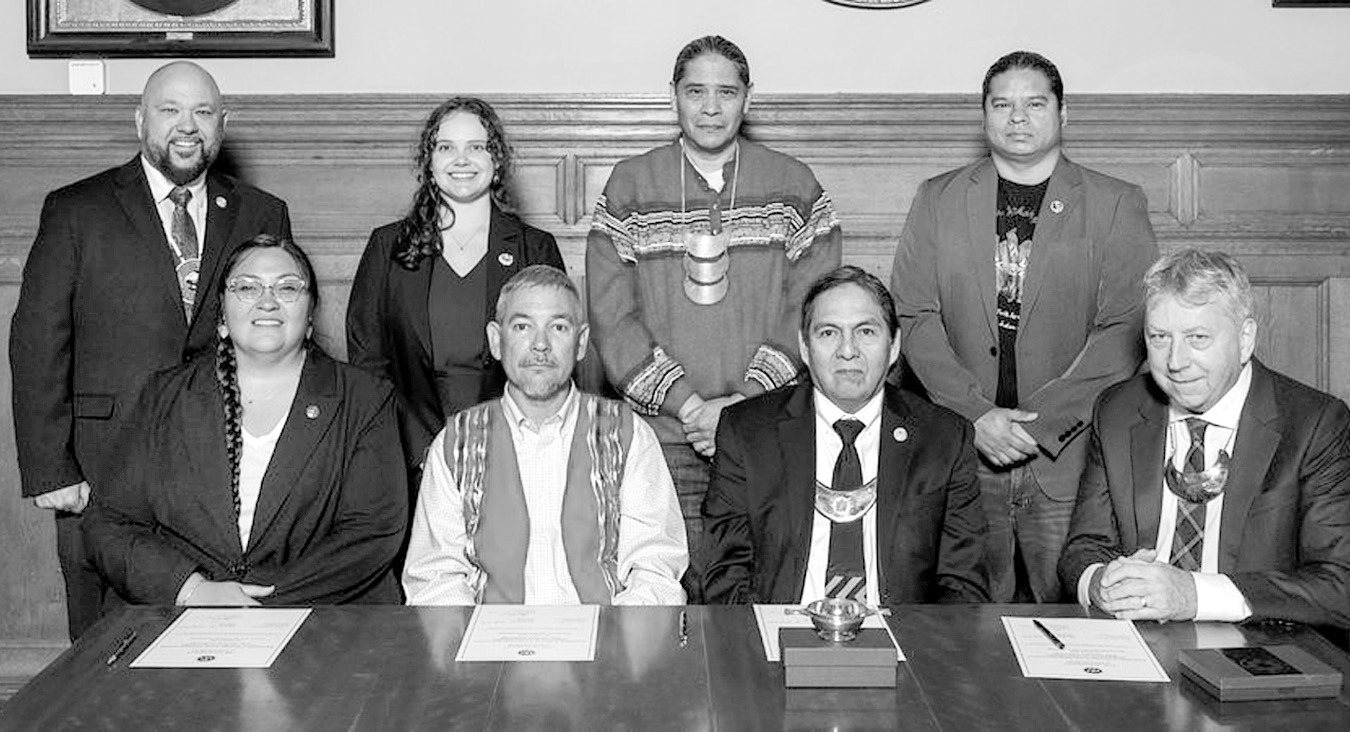
EDINBURGH, UK — A Scottish university has completed what is believed to be the first-ever international repatriation of ancestral remains to mainland United States.
More than 150 years after they were taken, the University of Edinburgh has returned the remains of six people from the Muscogee Nation during a formal ceremony in Edinburgh on Friday, January 23.
Once the remains are returned, the Nation’s Department of Culture and Humanities will formally repatriate them to the tribe’s original homelands in the Southeastern United States.
The ancestral remains were originally part of a collection belonging to Edinburgh’s Phrenological Society – a separate entity to the University – and were acquired sometime before 1858.
The Phrenological Society closed in 1886 and items in its collections were transferred to the Department of Anatomy at the University.
The remains were given to the Society by Professor W. Byrd Powell (17991867), an American physician and strong believer in the 19th century pseudoscience of phrenology.
Powell studied Native American skulls, thinking he could find links between their measurements, intellect and character traits.
A popular theory during the colonial era, phrenology formulated racist theories of inferiority based on the shape and dimensions of a skull.
While it has long since been discredited, ancestral remains taken from communities in order to study this theory still remain in museum collections across the world.
The University of Edinburgh’s Anatomical Museum now cares for approximately 1,000 items that once belonged to the Phrenological Society, including human and zoological skulls, plaster casts and artworks.
While not officially taught as an academic subject at Edinburgh, phrenology was supported by several influential figures, whose connections with the University gave it legitimacy and prestige.
The University continues to examine ways to address its legacy and the contemporary impact of its past.
In 2025, it carried out one of the most ambitious and wide-ranging academically- led examinations of history and race undertaken in the UK.
The result of more than four years of work, findings brought to light confronting and often uncomfortable accounts of its historical ties to slavery and colonialism, the legacy of racist teachings and ideologies, and current challenges around race and inclusion.
The Race Review is now driving sustained and meaningful change at the University, with a response group established to further consider and consult on its recommendations.
The work builds on activity already underway across the institution and includes repatriations of historical remains – an area where the University has a long-established record.
The University’s first repatriation took place more than 75 years ago and is widely considered to represent the first such activity in Scotland.
Most recently, in 2025, the remains of three Indigenous Ainu people were returned to their community in Japan.
“We have been blessed with a tremendous honor (Continued from Page 1) and respect from our friends at the University of Edinburgh with the return of these ancestral remains. What makes this occasion even more special and meaningful for us is that we had to travel over 4,000 miles and cross an ocean to receive the kind of dignity and decency that we still cannot find here at home. There are ancestors still not whole that are kept by institutions here in America. We can only hope that this incredible gesture by the University of Edinburgh will inspire these institutions to do the same, and move these continuing injustices in the right direction and on the right side of history,” said David Hill, Principal Chief of the Muscogee (Creek) Nation.
“Caring for and addressing the history of our collections is a key responsibility for the University and repatriations play a central role in this work. They also offer incredibly meaningful opportunities for us to work with communities around the world to build relationships and gain a better understanding of our shared past. I am honoured to have been able to play a part in returning these ancestral remains to the Muscogee Nation,” said Professor Tom Gillingwater, Chair of Anatomy at the University of Edinburgh.
“It has been a privilege to welcome representatives from the Muscogee (Creek) Nation and to assist in returning their ancestor’s remains,” said Sir Peter Mathieson Principal and Vice-Chancellor, University of Edinburgh. “Repatriations are an important part of our work to confront our history and we are unwavering in our commitment to continue addressing past and present racialised inequalities at the University.”