Local Survivor Recalls OKC Bombing
Saturday marked the 30th anniversary of the Oklahoma City bombing, which occurred on April 19, 1995. This solemn occasion was observed with various events and ceremonies in Oklahoma City that will continue through the rest of April.
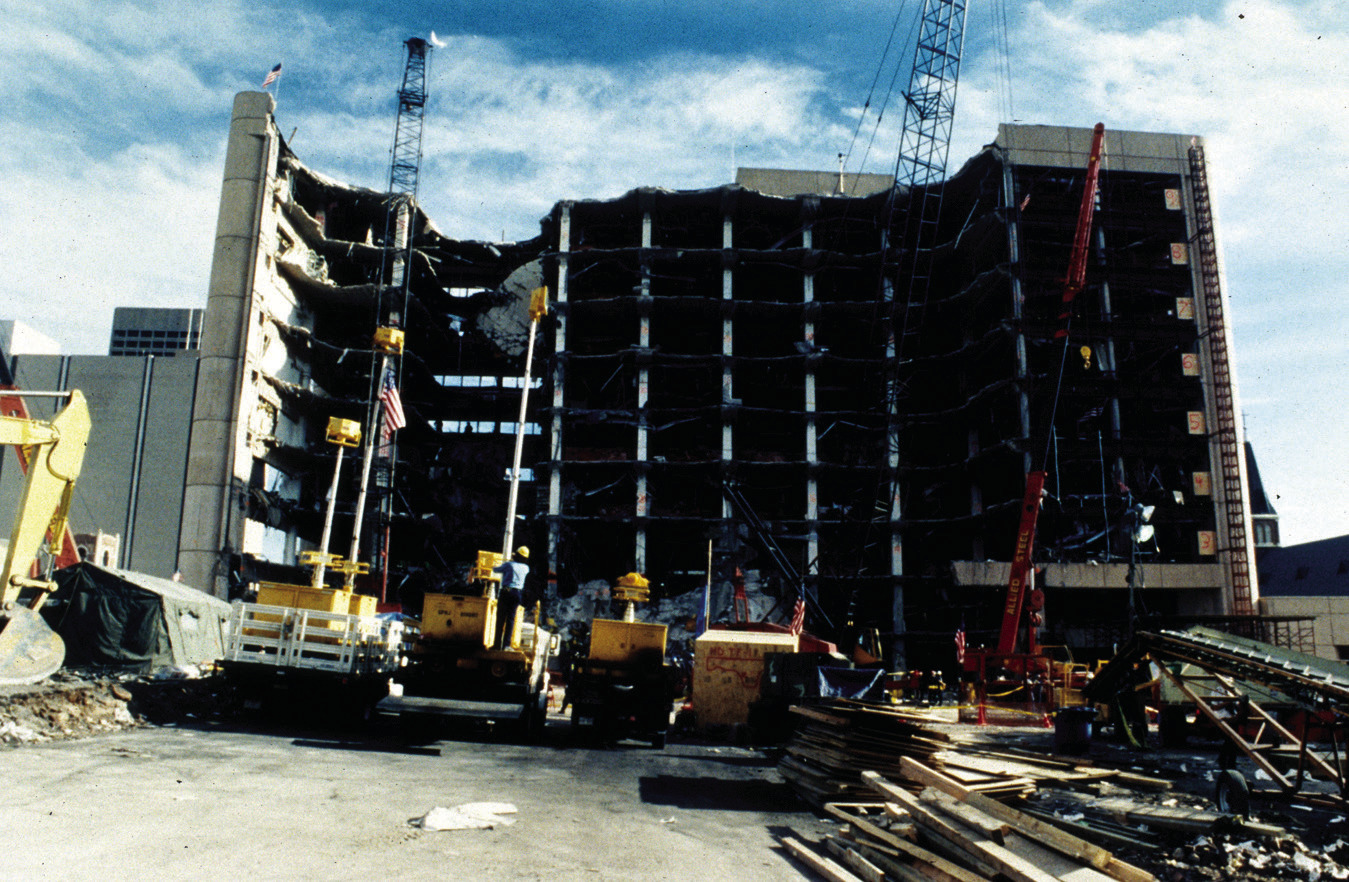
While it is extremely important that we always remember those who perished in this tragic event, it is just as important that we celebrate those who survived. The list of survivors includes Seminole resident Lorrie King. The home-made bomb, which exploded in front of the Alfred P. Murrah Federal Building, killed 168 people and injured hundreds more, making it one of the deadliest acts of domestic terrorism in U.S. history. It is hard for those who have never visited the bombing site to imagine how large of an area was damaged beyond just the Murrah Building. Twenty blocks of downtown OKC had to be cordoned off. 347 buildings were damaged 30 heavily damaged - and sixteen buildings have since been torn down. On April 19, 1995 Lorrie was working in the Journal Record Building, which was located just north of the Murrah Building and received significant damage from the bomb. She recalls that she had overslept that morning and was running late, so she didn’t actually arrive until 8:50 a.m. Before settling in to tackle paperwork at her desk in one of the small cubicles, she stopped in the break room for a cup of coffee. She notes this room had a huge picture window with the Murrah Federal Building filling the view.
Lorrie explains her desk was on the second floor facing north, and the Murrah Building was to the south, separated from the blast only by a parking lot. Twelve minutes after she clocked in, the 4,000pound bomb made of agriculture fertilizer, diesel fuel, and other chemicals went off at 9:02 a.m.
The roof of the Journal Record building where Lorrie was working was blown off, several floors collapsed and all of the windows were blown out, so shattered glass permeated the entire structure. Fortunately, there were no fatalities, although there were several critical injuries.
Interestingly, Lorrie can’t remember hearing the actual blast, although she believes she suffers some hearing loss because of it. “The next thing I remember, it felt like somebody was standing on my back, pushing me down. When I looked up all of the ceiling tiles were buckling like a wave going north,” Lorrie recalls. She doesn’t share what she said, exactly, but she hints it wasn’t very nice.
When the “wave” came bouncing back, it threw Lorrie into a support pole that partially blocked the entrance to her cubicle. She believes this knocked her unconscious for a short time, because the next thing she remembers is everything being black and smoky. She explains that, with the windows blown out, all of the smoke from the blast, as well as the cars that were burning in the parking lot, was entering the building.
As Lorrie started her exit from the building, she first unburied her purse from the rubble that now covered her desk and a jacket she had left in her office weeks before. She found a girl she had started training just three days earlier still sitting gripping her desk, frozen by shock. She ordered the girl to get up, offering her jacket to cover her face as protection from the smoke. The two headed for the closest exit on the south side. However, the walls were all collapsed on that side, so they rerouted to the north side, dodging obstacles such as electrical wires that were dangling from the ceiling.
When they reached the exit, they were blocked by all of the marble that had fallen off the front of the building. They were finally able to escape by jumping out of a window on the stairway into a flower bed outside.
Lorrie states that, as she joined others on 6th Street, a fireman on scene told them there was another bomb. They needed to get on either Harvey or Robinson Street, head north and don’t stop. This was how she learned that the damage had been caused by a bomb, and that the Journal Record Building wasn’t the only one that had been effected. It wasn’t until she hit Harvey Street that she was able to look back and see the collapsed back-end of the Journal Record Building and some of the surrounding damage.
The Journal Record Building now houses the OKC National Memorial Museum, with today’s Children’s Area located on the space where a small annex building containing the printing pad for the Journal Record Building once stood.
Lorrie states that before the museum first opened, survivors were first invited to a private preview. While viewing a plaque that gave a time-frame of the event, she saw how long it was before it was first mistakenly thought there was a second bomb. This was the first time she realized how long it had taken her to exit the building, adding to her believe she had been knocked unconscious.
Although Lorrie was extremely thankful to be alive, she now realizes she was affected more than she thought at first. She is currently recovering from back surgery, and she suspects her back problem, as well as trouble with other joints, may have been caused by the percussion of the bombing. Her doctor agrees, pointing out the damage that was caused to the building she was in. And even after she became aware of her pains, she first ignored them thinking about how much worse other survivors were affected. For example, a co-worker that was severely injured by flying glass from the picture window in the break room where she had poured her coffee just seconds before the blast. Other co-workers lost their children that were in the Murrah Building day care.
She also stops watching television around this time of year to avoid being caught off guard by programming about the bombing. And, obviously, she is still startled by any unexpected loud noises, even though she doesn’t remember the actual sound of the bomb. The smell of diesel still invites unwanted memories.
“My perspective of things are probably different than most peoples. And those that were in the Federal Building are totally different from mine,” she observes.
Lorrie notes that her son turned 12-years-old two days after the bombing. He has pointed out that her name (Lorrie Jones at the time) is on the Survivor Wall. Finding some small bit of humor, Lorrie shares that her son sometimes teases her by stating, “Mom, we always hope we make history, but I didn’t think you’d make it that way!”
Although she is a reluctant participant in this tragic page of history, we are thankful Lorrie is able and willing to share her unique, first-person experience of this event.
It is important that we never forget.