
latest

A Seminole man is in jail numerous alleged sex crime charges, according to Detective Chris Ayers with the Seminole Police Department. In June, Officer Anthony Louie took a report of some inappropriate sexual actions between multiple children, kicking off the initial investigation. During the course of the investigation, information led officials to look into 78-year-old Robert Renton.
Read moreSeminole will be spraying for mosquitoes Today and tomorrow according to city officials.
Read moreThe U.S. Department of Education recently awarded Seminole State College two grants totaling approximately $2.86 million. The College was officially notified of the awards Aug. 7 by the offices of U.S. Senator James Lankford and U.S. Congresswoman Kendra Horn.
Read more
Members of the Seminole State College Student Support Services team pose for a photo commemorating the 2.86 million in federal grants the program was awarded. Pictured: (back row left to right) Director Janna Wilson-Byrd, Peer Coach A-yo Jones, Administrative Assistant Patty Bland, Advisor Kristen Bean, Tutor Kirsten Stevenson and Advisor Damon Cravens; (front row left to right) Advisor Sarah Ledford, Advisor Laura Votaw and Tutor Jennifer Neugebauer.
Read moreA pre-nuptial gift shower in courtesy to Miss Mary Duncan, bride-elect of Mr. Frank Emerson of Edmond, was a Friday evening event in Fellowship hall of Sec ond Baptist church. Miss Duncan is the daughter of Mr, and Mrs. Si Duncan east of city.
Read more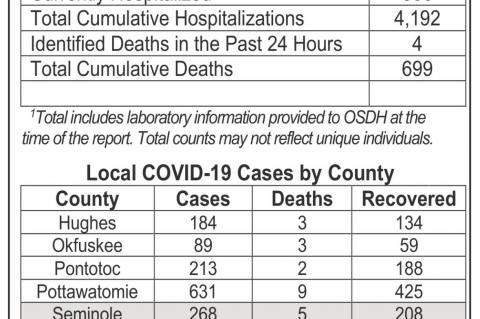
As of this advisory, there are 49,923 confirmed positive cases of COVID-19 in Oklahoma.
Read more
We asked teachers from Varnum Public Schools what they are looking forward to the most this school year. Based on their responses one thing is clear, all of the teachers at Varnum Public Schools are ready to be back in the classroom with their students! Here is what a few of the teachers had to say:
Read more
As Varnum teachers gear up for the first day of school Monday, we thought we’d take a moment to look back on what the Summer of 2020 looked like for Varnum Public School students.
Read more