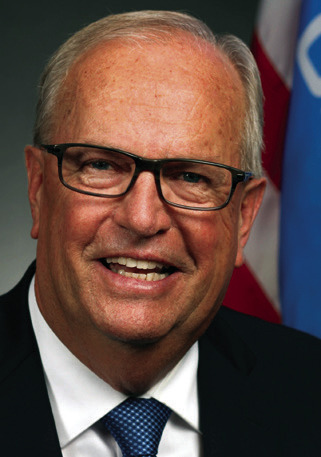
Williams Studies Corrections, Sentencing in Oklahoma
Rep. Danny Williams, R-Seminole, this interim held a study that examined criminal sentencing and decisions made by the Oklahoma Pardon and Parole Board.
The need for the study came into sharper focus after recent resignations of several Pardon and Parole Board members delayed board meetings.
The Pardon and Parole Board is required by the state Constitution to have five members; it temporarily had only three. Recent appointments by the governor brought the board back to full membership, but Williams said he will consider legislation that would prevent similar challenges going forward.
“One of the proposals that came forward in my study was for this board to have alternate members for the exact scenario they experienced,” Williams said. “I also am interested in increasing board member salaries and encouraging a more varied membership to ensure absolute fairness in the process.”
Williams would like to double the size of the board to 10, with some members serving as alternates. Current board members also receive only $22,000 a year in compensation, which is not a lot of incentive, he said.
One of the presenters for the study, Colleen McCarty with the Oklahoma Appleseed Center for Law and Justice, discussed the structure of the board, saying at least three of five board members must vote favorably for parole to be granted or recommended to the governor in violent cases.
The overall purpose of the study was to examine why Oklahoma has some of the longest sentencing times in the nation and to investigate the decision- making process of the Pardon and Parole Board.
“We’ve seen a pattern in which we’ve reacted out of fear and anger when sentencing those in our criminal justice system and then in keeping them incarcerated,” Williams said. “We make decisions based on trauma as opposed to what makes sense. We need to see where the system disadvantages those who should or could use an opportunity to rebuild their lives. I want to make a difference in a positive way, and that is part of the discussion on sentencing and where we might be able to go.”
McCarty and Cody Allen, a criminal justice policy analyst with the Oklahoma Policy Institute, both reported that Oklahoma has some of the longest criminal sentences in the country, which costs state taxpayers billions of dollars.
McCarty shared the median time served in Oklahoma in 2021 was a full year longer than the national average. As of July 2021, there were 8,027 people imprisoned on sentences of 20 years or more – higher than Oklahoma’s entire prison population in 1984. The state spends about $455,000 to incarcerate someone for that length of time, she said, which means state taxpayers spent an estimated $3.7 billion on the people with 20-year sentences.
As many as 3,774 people in prison are facing the prospect of spending the rest of their life in prison.
Allen showed that despite Oklahoma no longer being the No. 1 incarcerator of people worldwide, the state’s prison population is still nearly 60% higher than the national rate with one in ten women incarcerated and one in six men. One in three prisoners are black, and one in three are over the age of 55. Lengthier sentences do not improve public safety outcomes, and crowded prisons are dangerous for both inmates and staff, Allen said. In addition, aging adults have incred-
“
We need to see where the system disadvantages those who should or could use an opportunity to rebuild their lives. I want to make a difference in a positive way, and that is part of the discussion on sentencing and where we might be able to go.”
State Representative Danny Williams ibly low recidivism rates.
He also showed that long sentences hurt Oklahoma families and communities, with 26,000 children in Oklahoma having a parent that is incarcerated. Lengthy sentences also put financial strain on non-incarcerated family members and deplete the state’s workforce, impacting communities statewide.
At the same time, the number of paroles granted decreased.
McCarty referenced a recent study that shows a significant decline in the parole grant rate. In 2021, 36% of prisoners who appeared before the board received a favorable recommendation. That dropped to 24% in 2023, with 323 fewer nonviolent prisoners granted parole than in 2021.
Allen suggested the Pardon and Parole Board should better investigate eligible cases for parole to determine if early release from prison would best serve the public interest. They also should more readily consider medically frail or aging prisoners for parole, he said. These measures would lower incarceration costs and enable positive reentry for those leaving prison, he said.
With the state’s help, paroled individuals can obtain a steady job and contribute to Oklahoma’s tax base, and parolees can reunite with their families and become active members of their communities, Allen said.
McCarty discussed legislation in other states that allows courts to reconsider a sentence in certain cases, such as a person’s age at the time the offense was committed and the amount of time served. Some states provide judicial reviews focused on specific populations such as military veterans, those sentenced under habitual offender laws, and domestic violence survivors.
Recommendations from McCarty included increasing the number of people eligible for sentencing reviews, including judicial discretion and authority to reduce mandatory and plea-bargained sentences, reducing wait times between reviews, providing rights to hearings and to appointed counsel for a petition and hearing, among others. She also addressed prosecutorial misconduct and ways the state can guard against this.
Michael Olson, policy counsel with Oklahomans for Criminal Justice Reform, also spoke to study participants about life without parole for juveniles and young adults.
Oklahoma is one of 23 states that allow life without parole sentences for people under 18. Olson spoke of other states that have banned such sentences for juveniles, including surrounding states: Arkansas, Kansas, Colorado, New Mexico and Texas. He gave examples of legislation from states that allow for parole of juveniles convicted of offenses punishable by life imprisonment after they have served between 15 to 30 years.
Olson also spoke about cognitive and brain development, which studies show is not complete until near the age of 25. One study shows an extensive amount of literature links prefrontal cortex damage with impulse control, antisocial behavior and criminality.
Williams said he particularly wanted to look at sentencing for these youthful offenders and perhaps find alternative ways to help them